
New York Sweepstakes Casino Ban: Senate Bill S5935 Impact
 Available in US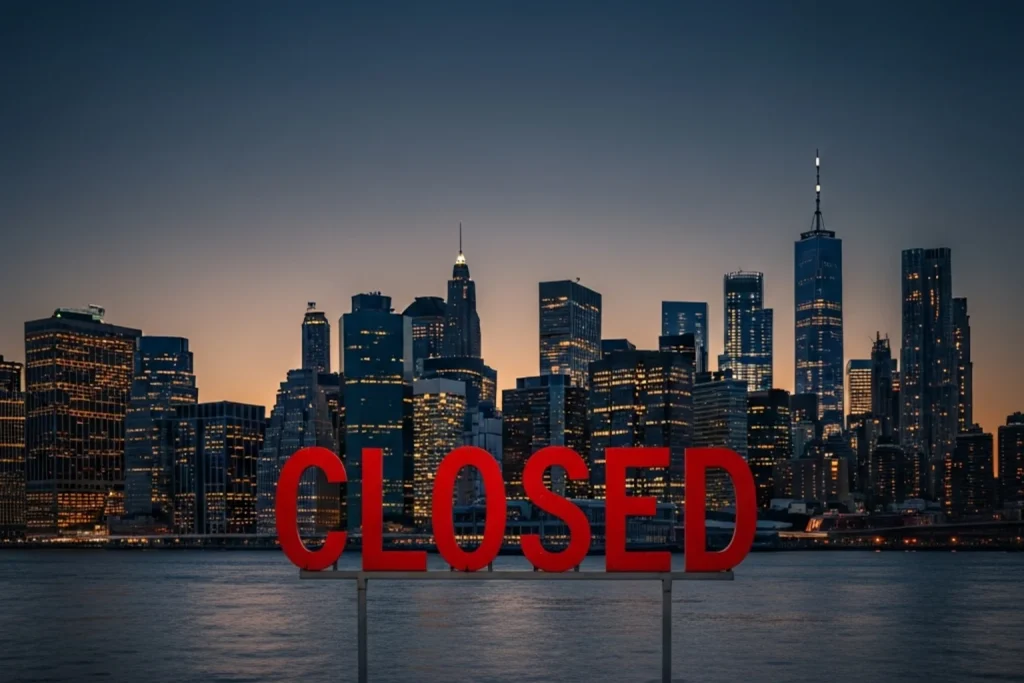
New York’s sweepstakes casino ban wasn’t just another state following California’s lead — it was a calculated move to protect one of the most lucrative gambling revenue streams in the country. When Governor Kathy Hochul signed Senate Bill S5935 into law in 2026, she shut down a market that had generated $762 million in sweepstakes casino sales during 2026 alone, according to data from Eilers & Krejcik Gaming. That made New York the second-largest sweepstakes market in the US behind California, and the second domino to fall in what’s becoming a national pattern of legislative crackdowns.
But New York’s ban carried a subtext that California’s didn’t. Albany has been inching toward legalizing full online casino gaming for years, with billions in projected tax revenue hanging in the balance. Sweepstakes casinos — operating without licenses, paying no state gaming taxes, and siphoning customers from the state’s regulated betting ecosystem — represented a direct threat to that revenue calculus. S5935 wasn’t just about consumer protection. It was about clearing the field.
Senate Bill S5935 Scope and Legal Enforcement in New York
S5935 takes a somewhat different approach than California’s AB 831, though the end result is the same: sweepstakes casinos are prohibited from operating in New York. The bill amends the state’s Racing, Pari-Mutuel Wagering and Breeding Law to create a categorical ban on operating, conducting, promoting, or supporting online sweepstakes casinos that use a dual-currency system allowing players to exchange game currency for cash prizes, cash awards, or cash equivalents, and which mimic casino gaming, sports betting, lottery products, or bingo.
The key distinction in S5935’s language is the emphasis on the dual-currency redemption mechanism as the trigger for prohibition. Rather than folding sweepstakes into existing criminal gambling statutes, New York created a new regulatory prohibition enforced primarily through civil penalties and licensing consequences. This means violations carry fines of $10,000 to $100,000 per offense — significantly steeper than California’s $1,000 to $25,000 criminal penalty range — plus the potential revocation of gaming licenses or permanent ineligibility for future licenses.
Enforcement authority is explicitly shared among the New York State Gaming Commission, state police, and the Attorney General’s office under the bill’s provisions. The Gaming Commission — the same body that oversees licensed casinos and sports betting — has direct authority to investigate and issue cease-and-desist orders against sweepstakes operators. This overlap matters: a company found violating S5935 can be denied any future gaming license in New York, which gives the law teeth against operators who might eventually seek to enter the state’s regulated iGaming market.
Unlike California’s AB 831, which treats violations as criminal misdemeanors with penalties up to $25,000, S5935 imposes civil fines ranging from $10,000 to $100,000 per violation and adds the potential loss of any existing gaming license or future eligibility for one. That financial exposure makes the New York law particularly threatening for established gambling companies with active license applications — including those vying for the state’s upcoming downstate casino permits.
S5935 also extends liability beyond operators. The law makes it unlawful for technology suppliers, game providers, payment processors, platform providers, geolocation firms, and media affiliates to support or promote online sweepstakes games in New York. This supply-chain approach mirrors California’s AB 831 strategy of cutting off the infrastructure that keeps sweepstakes platforms operational, rather than relying solely on enforcement against offshore operators. Crucially, the law took effect immediately upon Governor Hochul’s signature on December 5, 2026 — there was no grace period for operators to wind down, unlike California’s January 1, 2026 effective date.
Timeline — From Introduction to Signature
S5935 was introduced in March 2026 by Senator Joseph Addabbo Jr., chair of the Senate Racing, Gaming and Wagering Committee. The bill advanced through committee, received an amendment in April creating the formal version S5935A, and passed the Senate on June 11. The Assembly followed within a week, passing the identical text and completing the legislative process on June 17, the final day of the 2026 session.
The political groundwork was laid by a combination of forces. The American Gaming Association had been lobbying state legislatures across the country, presenting research showing that sweepstakes casinos operate as de facto gambling sites without the consumer protections or tax contributions of licensed operators. New York’s existing gambling industry — which includes commercial casinos, tribal casinos, the state lottery, and a massive mobile sports betting market — had obvious financial interests in seeing unlicensed competitors removed. And consumer advocacy groups pointed to growing complaints about account freezes, payout denials, and aggressive marketing practices. Attorney General Letitia James accelerated the timeline by sending cease-and-desist orders to 26 sweepstakes platforms in June 2026 — all 26 complied, including VGW, Fliff, High 5 Casino, and Fortune Coins.
Then the bill sat dormant for nearly six months. It was not formally delivered to Governor Hochul’s desk until December 1, 2026. Within four days, on December 5, Hochul signed it into law with immediate effect. The delay had given sweepstakes proponents hope that a veto might be forthcoming, but the signing ultimately coincided with New York’s announcement of three downstate casino licenses — a move that underscored Albany’s preference for regulated, tax-generating gambling over the unregulated sweepstakes model.
How Operators Responded — VGW, Stake.us, and Others
The operator response to New York’s ban followed a pattern that had already been established in Connecticut, where VGW shut down operations after facing legal pressure. VGW — whose Chumba Casino and LuckyLand Slots platforms were among the most popular sweepstakes casinos in New York — implemented geoblocking for New York users and began processing final redemptions for accounts with outstanding balances. The company’s market share had already been eroding, dropping from roughly 90% of the US sweepstakes market in 2020 to approximately 50% by 2026, according to Eilers & Krejcik data reported by SBC Americas. Losing New York accelerated that decline.
Stake.us, the crypto-friendly platform operated by Sweepsteaks Limited (affiliated with the broader Stake brand), also pulled out of New York, though the company’s offshore structure made the exit less operationally disruptive than it was for US-adjacent companies. Stake.us had already been navigating a patchwork of state-level restrictions and was accustomed to adjusting its geolocation parameters.
Smaller operators faced harder choices. For platforms with thin margins and heavy reliance on a few key states for revenue, losing New York — alongside California — represented a one-two punch that threatened viability. Some responded by doubling down on marketing in unrestricted states. Others began exploring compliance frameworks in case regulated markets eventually open, hoping to position themselves for licensing if the legal landscape shifts toward regulation rather than prohibition.
The SGLA issued statements framing the New York ban as part of a coordinated campaign by incumbent gambling interests, arguing that prohibition pushes players toward genuinely unregulated offshore platforms rather than solving consumer protection problems. It’s an argument that carries some logical weight, even if it’s also self-serving.
New York’s iGaming Ambitions — The Bigger Picture
New York’s sweepstakes ban only makes full sense when you look at what the state wants to build next. New York has been debating the legalization of online casino gaming — full iGaming, with slots, table games, and live dealer products offered through licensed, tax-paying operators — for several years. The projected tax revenue from a regulated iGaming market is enormous. Estimates have placed the potential annual tax haul in the hundreds of millions, with some projections reaching over a billion dollars depending on the tax rate structure.
Sweepstakes casinos were a wrench in those projections. Every dollar spent on Gold Coin packages at Chumba or Stake.us was a dollar that wasn’t flowing through a regulated, taxed channel. Every player engaged with a sweepstakes platform was a player who might not convert to a licensed iGaming product once it becomes available. By banning sweepstakes casinos now, New York is effectively pre-clearing the market for the licensed operators that will eventually fill that space.
The politics reinforce this reading. New York’s mobile sports betting market, launched in 2022, has generated billions in handle and hundreds of millions in tax revenue. The state has demonstrated that it values gambling as a revenue stream — but only when it flows through regulated, taxable channels. Sweepstakes casinos, with their no-license, no-tax model, were structurally incompatible with that approach.
For players, the practical takeaway is that New York is not anti-gambling. It’s anti-unregulated-gambling. When and if iGaming launches in New York, residents will likely have access to the same games currently offered by sweepstakes casinos — slots, table games, even some of the same titles from the same providers — but through platforms that hold state licenses, submit to regulatory audits, and provide mandated consumer protections. The transition from sweepstakes gray zone to regulated market may take time, but the trajectory in Albany is clear.