
California Sweepstakes Casino Ban: AB 831 Legal Status
 Available in US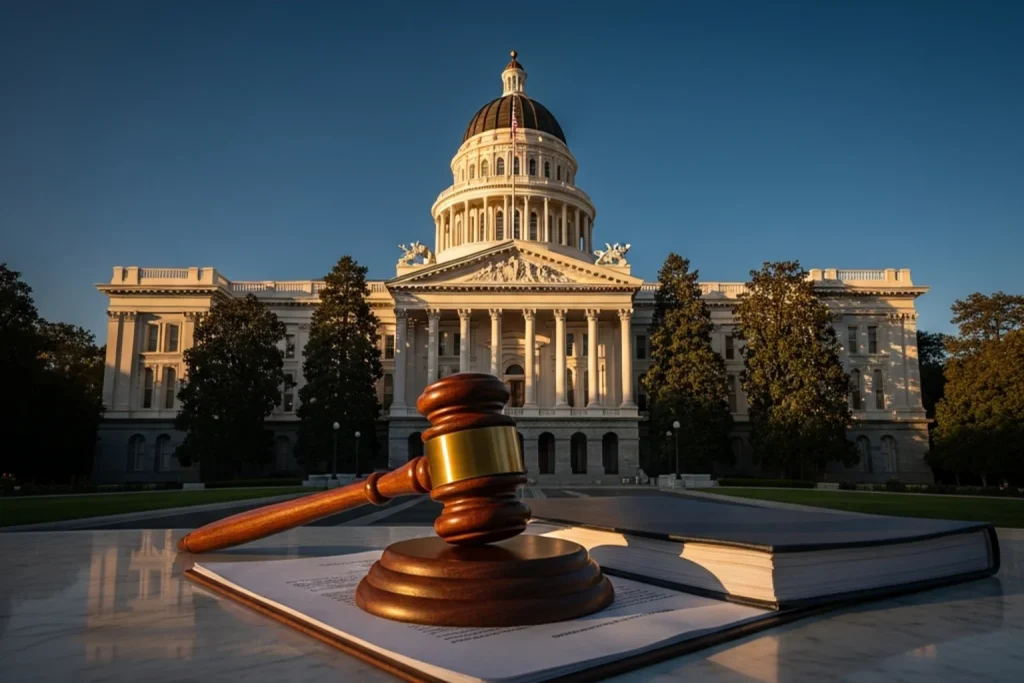
On October 11, 2026, California Governor Gavin Newsom signed Assembly Bill 831 into law, making California the largest state to ban sweepstakes casinos outright. The bill passed both chambers without a single dissenting vote — 36-0 in the Senate and 63-0 in the Assembly — a level of bipartisan unanimity that’s rare in Sacramento on any issue, let alone one involving the gambling industry.
AB 831 didn’t just block new sweepstakes platforms from entering the California market. It redefined what constitutes an illegal sweepstakes operation, extended criminal liability to the vendors and service providers that keep these platforms running, and established penalties steep enough to make continued operation in the state a genuinely bad idea. For an industry that had been treating California as its single largest revenue source, the law landed like a controlled demolition.
Understanding what AB 831 actually says — not just the headline, but the mechanism — matters for players, operators, and anyone tracking how the sweepstakes casino model is evolving under legislative pressure.
Inside AB 831: What the California Law Mandates
AB 831 works by broadening California’s existing prohibition on illegal gambling to explicitly cover the sweepstakes casino model. The law targets the specific mechanism these platforms use: offering a virtual currency with no cash value (Gold Coins) alongside a redeemable currency (Sweeps Coins) that functions as a gambling chip in everything but legal classification.
The bill defines a prohibited “online sweepstakes operation” as any internet-based service that uses a dual-currency system where one currency can be redeemed for prizes of monetary value, and where the outcome of gameplay is determined by chance. That definition is surgically precise — it captures the exact structure used by Chumba Casino, Stake.us, WOW Vegas, McLuck, and every other platform built on the Gold Coin/Sweeps Coin model, while avoiding overlap with legitimate promotional sweepstakes like contests run by retailers or media companies.
What makes AB 831 unusual — and what sent shockwaves through the industry — is the scope of liability. The law doesn’t just target the casino operators themselves. According to legal analysis by ZwillGen, AB 831 extends criminal responsibility to payment processors who handle transactions for sweepstakes casinos, geolocation providers that verify user locations, game content suppliers that provide slot titles and RNG engines, and marketing affiliates that drive traffic to the platforms. Each of these service providers faces penalties ranging from $1,000 to $25,000 per violation, plus potential imprisonment of up to one year.
This vendor liability provision is the part of the law that matters most in practice. An operator based in Australia or Curacao can ignore a California statute with relative impunity — enforcing a criminal penalty across international borders is expensive and slow. But the payment processors, geolocation companies, and game studios that enable these platforms are often US-based businesses with domestic assets and reputations to protect. By making it a crime for these vendors to service sweepstakes casinos in California, the law effectively cuts off the supply chain rather than trying to chase individual operators.
The enforcement mechanism is straightforward. The California Department of Justice and local district attorneys have authority to prosecute violations. There’s no licensing framework or regulatory pathway built into AB 831 — the law is a flat prohibition, not an invitation to negotiate terms of compliance.
Market Impact — California’s $2.4 Billion Exit
California wasn’t just another state in the sweepstakes casino ecosystem. It was the state. Data from Eilers & Krejcik Gaming, published through Sweepsy, shows that California accounted for 17.3% of all US sweepstakes casino sales in 2026 — roughly $2.42 billion in player purchases. No other single state came close. Losing California was the equivalent of a retail chain losing its highest-volume store overnight.
The financial impact radiated outward. For VGW, whose Chumba Casino and LuckyLand Slots platforms had deep penetration in the California market, the loss represented a significant chunk of US revenue. For smaller operators already operating on thin margins, the California exit squeezed budgets that were already tight. Marketing campaigns targeting California users had to be pulled. Geolocation vendors had to update their systems to block California IP addresses. Affiliate sites had to restructure their funnels to redirect California traffic.
The broader market signal was arguably more damaging than the direct revenue loss. California’s unanimous vote demonstrated that sweepstakes casino bans can pass with overwhelming bipartisan support, even in a state with no significant tribal opposition to the law’s specific provisions. For legislators in other states considering similar measures, AB 831 provided a template: clean definitions, vendor liability, strong penalties, and — critically — zero political resistance in the final vote.
Analysts at Eilers & Krejcik responded by revising their 2026 industry forecast downward. The base-case projection now calls for $3.6 billion in net revenue — a 10% decline year over year — with a bear-case scenario of a 30% drop if additional large states follow California’s lead.
Industry Response — SGLA and Tribal Opposition
The sweepstakes casino industry did not go quietly. The Social Gaming Leadership Alliance — a trade group formed in May 2026 with VGW as its founding partner — mounted a public campaign against AB 831 in the months leading up to the vote. SGLA’s executive director, Jeff Duncan, a former US congressman from South Carolina, called the bill a rushed and flawed piece of legislation that lacked broad tribal consensus. Duncan argued that California lawmakers should have pursued regulation rather than prohibition, creating frameworks that would generate state revenue while protecting consumers.
The tribal angle was particularly complicated. California’s tribal gaming interests are powerful and well-organized, and they were a driving force behind AB 831. Tribes with significant land-based and online gaming operations viewed sweepstakes casinos as unlicensed competitors siphoning revenue from regulated channels. But not all tribes were united. SGLA specifically claimed that AB 831 ignored the perspectives of tribes that saw potential in the sweepstakes model as a new revenue stream, particularly smaller tribes without established casino operations.
In practice, the industry’s opposition had little effect on the legislative outcome. The unanimous vote margins — 36-0 and 63-0 — suggest that by the time AB 831 reached the floor, the political calculation was already settled. The combination of tribal support, law enforcement endorsement, and growing public awareness of sweepstakes casino issues made opposing the bill a political risk with no obvious upside.
After the bill’s passage, operators pivoted to messaging. VGW and SGLA began framing AB 831 as an outlier — a product of California’s unique political dynamics rather than a harbinger of national policy. Whether that framing holds depends entirely on what happens in the half-dozen other states now considering similar measures.
What California Players Need to Know
If you’re in California, the practical implications are blunt: you can no longer legally access sweepstakes casinos. Major platforms began geoblocking California users around the law’s effective date, and those that didn’t pull out voluntarily are now operating in violation of state law. Attempting to access a blocked platform through a VPN doesn’t change your legal exposure — it just adds deception to the equation, which makes any subsequent dispute over account access or redemptions significantly harder to win.
For players who had active accounts with SC balances at the time of the ban, the transition was messy. Some operators offered a grace period for pending redemptions. Others locked California accounts and directed users to customer support for manual processing. A few simply froze accounts with no communication, leaving players to discover the block on their own. There’s no standardized process because there’s no regulator requiring one — each operator handled the transition according to its own policies.
If you have unredeemed Sweeps Coins on a platform that has already blocked California access, your best course of action is to contact the operator’s support team directly, reference your state of residence, and request a final redemption. Document everything. If the operator refuses to process the redemption, file a complaint with the California Attorney General’s consumer protection division. The law is designed to shut down the platforms, not to punish individual players — but that distinction may not help you recover a balance that an operator decides to forfeit.
Looking forward, there’s no mechanism within AB 831 for future legalization of sweepstakes casinos through licensing. If California eventually opens a path for these platforms, it would require entirely new legislation — a process that, given the political dynamics that produced the unanimous ban, isn’t likely to move quickly.